Charlotte County
Living in Punta Gorda, Florida
Punta Gorda sits at the southern end of Charlotte Harbor, where the Peace River meets the harbor, in Charlotte County at the southern edge of the region this guide covers. It is a small incorporated city with a genuine historic downtown and an unusually strong relationship to the water.
Overview
About Punta Gorda
Punta Gorda sits at the southern end of Charlotte Harbor, where the Peace River meets the harbor, in Charlotte County at the southern edge of the region this guide covers. It is a small incorporated city with a genuine historic downtown and an unusually strong relationship to the water.
The city's layout is defined by its canal system. Punta Gorda Isles and Burnt Store Isles, two of the city's best-known residential areas, were built around networks of canals with direct boat access to the harbor and, from there, to the Gulf. For boaters, that access is the central appeal.
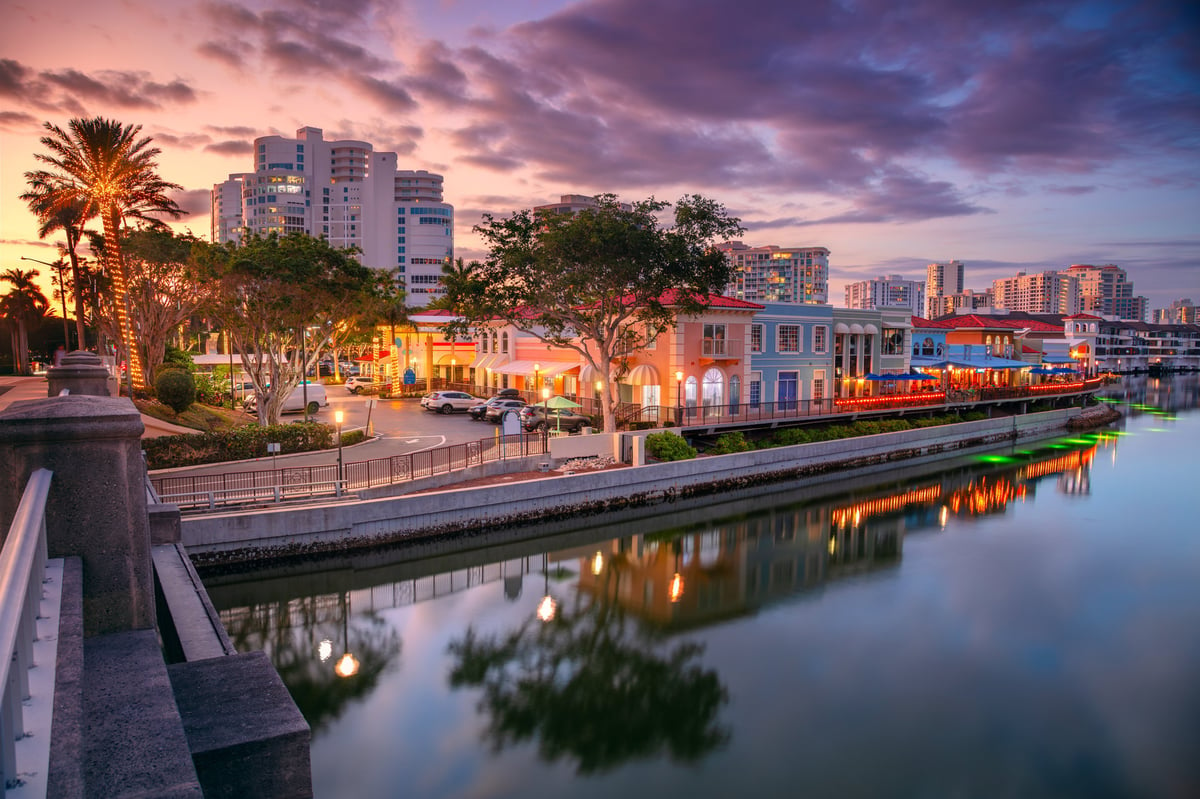
Downtown Punta Gorda is compact and walkable, with a harborwalk along the waterfront, historic buildings, and a concentration of restaurants. It is a substantially smaller and quieter downtown than Sarasota's, and that is generally the point for people who choose it.
Why people consider Punta Gorda
Boating and canal access
The canal system gives a large share of the city's homes direct boat access to Charlotte Harbor and beyond. For buyers whose priority is getting on the water from their own dock, Punta Gorda is one of the strongest options in the region.
A walkable historic downtown
Downtown Punta Gorda is compact, walkable, and positioned along the harbor, with a harborwalk, waterfront parks, and a concentrated dining district. It is a real town center rather than a commercial strip.
Smaller scale than Sarasota
Punta Gorda is considerably smaller and less developed than the Sarasota area, with less traffic and a more relaxed pace. Buyers often describe choosing it precisely to get away from the busier coastal cities.
Charlotte Harbor waterfront
The harbor itself is a major amenity — boating, fishing, waterfront dining, and harborfront parks. It is a working and recreational waterway rather than a beach, and it shapes daily life in the city.
Harbor access without Gulf-front pricing
Waterfront and canal-front property in Punta Gorda generally costs less than comparable Gulf-front or bayfront property further north in Sarasota County, while still providing direct water access.
Cost of Living
What Shapes Cost of Living in Punta Gorda
Punta Gorda generally sits below the Sarasota County coastal communities on price, and its canal-front and harbor-adjacent inventory offers direct water access at price points that are considerably lower than Gulf-front property to the north. Within the city, values vary between canal-front, historic downtown, and inland properties.
Florida has no state income tax, which is a genuine advantage relative to many states buyers relocate from. Property insurance is a significant recurring cost in Florida and is especially relevant for waterfront property — canal-front and near-harbor homes can carry higher premiums and different coverage requirements, and flood designation varies property by property. Charlotte County has also experienced significant hurricane impacts in recent years, which is relevant both to insurance costs and to how buyers should evaluate a specific property's construction and elevation.
Property taxes are assessed by Charlotte County on assessed value and applicable millage, with homestead exemptions available for qualifying primary residences.
HOA obligations vary. Many canal-front neighborhoods in Punta Gorda Isles and Burnt Store Isles are governed by associations with dues covering common areas and sometimes canal maintenance, while other parts of the city have no association. Some golf and gated communities carry substantial dues. Where CDD assessments apply they appear on the tax bill rather than the HOA statement.
On pricing and fee figures
Home prices, property taxes, HOA dues, and CDD assessments in this area move frequently and are set property by property — they are not uniform across a city or even across a single community. Rather than publish figures that may be out of date the day they are posted, Carolin will pull current, property-specific numbers for any home you are considering.
Demographics
Who Lives in Punta Gorda
Punta Gorda has a notably older median age, reflecting a substantial retiree population drawn by the water access, boating, and walkable downtown, alongside year-round residents and a pronounced seasonal population that increases in winter months.
The city is small enough that its character is fairly consistent across neighborhoods, though the canal-front areas and the historic downtown differ in feel. Much of the housing stock is established rather than new.
For current population, age, and household figures, see the U.S. Census Bureau's population estimates and the American Community Survey data for Charlotte County. Carolin does not publish demographic figures that she cannot verify against a current source.
Schools
Schools Serving Punta Gorda
School District: Charlotte County Public Schools
Punta Gorda is served by Charlotte County Public Schools, which operates the elementary, middle, and high schools serving the city, alongside charter and private options in the broader Charlotte County area.
Attendance zones are assigned by property address and can change. Families should verify current zoning and enrollment eligibility directly with the district rather than relying on any school information published on a community or listing page.
Important — verify school assignments
School assignments and attendance boundaries can change. Buyers should verify current zoning and enrollment eligibility directly with the applicable school district.
Shopping & Dining
Shopping and Dining Around Punta Gorda
Historic Downtown Punta Gorda
The downtown district concentrates restaurants, cafes, galleries, and local shops in a compact, walkable area along the harbor, with the harborwalk connecting the downtown to the waterfront. It is the city's primary dining and shopping destination.
Waterfront dining on the harbor
Charlotte Harbor and the Peace River waterfront carry a concentration of seafood and waterfront restaurants, several accessible by boat as well as by car — a practical amenity for residents with canal access.
US-41 corridor
The Tamiami Trail corridor through Punta Gorda carries everyday grocery, retail, and service businesses serving the surrounding residential areas.
Port Charlotte to the north
For larger-format retail and a broader selection of national brands, residents generally drive north into Port Charlotte, which has the area's principal shopping district.
Fishermen's Village
A waterfront shopping and dining complex on the harbor in Punta Gorda, combining retail, restaurants, and marina facilities. It is one of the city's better-known destinations.
Beach Access
Beaches Near Punta Gorda
Charlotte Harbor and the Peace River
Immediately accessible. The harbor provides boating, fishing, waterfront parks, and dining — the water access that defines the city, though it is not a Gulf beach.
Ponce de Leon Park and harborfront parks
Within the city, providing shoreline access, small beaches, and boat ramps along the harbor rather than Gulf surf.
Boca Grande and Gasparilla Island
West across Charlotte Harbor via the Boca Grande Causeway, a toll road. A distinctive historic island community with Gulf beaches.
Englewood Beach and Manasota Key
Northwest through Port Charlotte and Englewood. The nearest Gulf beaches, generally quieter than the Sarasota beaches.
Distances and drive times are approximate and depend on your starting point within Punta Gorda, route, and traffic. Verify with a current map before relying on them.
Airports & Travel
Airport Access From Punta Gorda
Punta Gorda Airport (PGD)
Within the city. The closest airport by a wide margin, serving a limited set of routes — exceptionally convenient when it covers your destination.
Southwest Florida International (RSW)
Southeast via I-75 near Fort Myers. A larger option with substantially more destinations, and generally the next-closest alternative.
Sarasota-Bradenton International (SRQ)
North via I-75. A regional alternative for some routes, though a longer drive.
Tampa International (TPA)
North via I-75. The largest option overall, though the longest drive of these.
Regional Access
Distance to Major Cities
Port Charlotte
North via US-41. The adjacent community and the nearest larger shopping area.
Fort Myers
Southeast via I-75. The nearest larger metro area, and a routine trip for the Southwest Florida airport.
Venice
Northwest via US-41. The nearest Sarasota County coastal downtown.
Sarasota
North via I-75. Accessible for work, dining, and cultural events.
Tampa
North via I-75. The main option for major air travel and larger venues.
Miami
Southeast across the state. A long drive; practical mainly by air.
Approximate. Traffic, time of day, and season affect travel time considerably — particularly on I-75 and the Sunshine Skyway corridor.
Growth & Development
How Punta Gorda Is Changing
Development status is labeled below so you can tell what exists today from what is still in progress or proposed. Labels reflect how these areas are generally described; specific projects change, and a proposal is not a completed project.
Canal systems and canal-front neighborhoods
EstablishedPunta Gorda Isles, Burnt Store Isles, and the city's canal network are long completed, and the neighborhoods built along them are established. Sales here are predominantly resale, and the canals are finished infrastructure rather than a project in progress.
Historic downtown and harborfront
EstablishedThe downtown core and its harborfront are built out, with historic designation protecting much of the character. Change takes the form of renovation and individual redevelopment rather than new subdivision.
Individual new construction and rebuilds
ActiveNew construction in Punta Gorda tends to be individual homes on existing lots — including rebuilds following recent hurricane seasons — rather than large new subdivisions. Activity is project specific and intermittent.
Golf and gated communities
EstablishedThe city's golf and gated residential communities are developed and operating with established governance and association structures. Inventory is largely resale.
Hurricane recovery and infrastructure work
PlannedCharlotte County and Punta Gorda have ongoing recovery and infrastructure work following recent hurricane seasons, which has affected both residential rebuilding and public facilities in the area. In-progress and planned public works are not completed projects — current status should be confirmed with the City of Punta Gorda or Charlotte County.
Communities & New Developments
Communities in Punta Gorda
The neighborhoods and developments you will encounter when searching Punta Gorda. Each opens to a page describing the area; builders, phases, pricing, and amenities change frequently and are best confirmed with the developer directly.
Punta Gorda
Punta Gorda Isles
Community information, location, and how to confirm current details.
View Punta Gorda IslesPunta Gorda
Burnt Store Isles
Community information, location, and how to confirm current details.
View Burnt Store IslesPunta Gorda
Burnt Store Marina
Community information, location, and how to confirm current details.
View Burnt Store MarinaPunta Gorda
Historic Downtown Punta Gorda
Community information, location, and how to confirm current details.
View Historic Downtown Punta GordaPunta Gorda
Deep Creek
Community information, location, and how to confirm current details.
View Deep CreekPunta Gorda
Riverwood
Community information, location, and how to confirm current details.
View RiverwoodPunta Gorda
Seminole Lakes
Community information, location, and how to confirm current details.
View Seminole LakesPunta Gorda
Peace River Shores
Community information, location, and how to confirm current details.
View Peace River ShoresPunta Gorda
Charlotte Harbor
Community information, location, and how to confirm current details.
View Charlotte HarborCommon Questions About Punta Gorda
What should I know before buying in Punta Gorda?
Start with how you will actually live there — commute, school considerations, and how close you want to be to the water. Because Punta Gorda covers a large area with meaningfully different neighborhoods, the same city name can mean very different daily routines depending on where you land. Carolin helps narrow that down before you start touring homes.
Is Punta Gorda still growing?
Growth across this corridor has been significant, but it varies by area and by project, and it changes. The growth section on this page labels status so you can distinguish what is established from what is active, under construction, or proposed — and any specific project should be verified with the developer or the applicable county planning department.
How do I verify HOA and CDD fees for a home in Punta Gorda?
HOA dues and CDD assessments are set per community and sometimes per neighborhood within a community, so there is no single figure for a city. For any specific home, the seller's disclosure, the HOA's current budget and governing documents, and the CDD's published assessment schedule are the authoritative sources. Carolin will help you identify which of these apply before you make an offer.
Which school would my child attend?
Attendance zones are assigned by property address, not by city or community, so two homes in the same development can differ. Verify current zoning and enrollment eligibility directly with the school district before relying on any school information.
Explore Nearby Areas
Looking for a Home in Punta Gorda?
Tell us what you're looking for and we'll help you explore homes, new construction and communities in Punta Gorda.
Information is subject to change. Verify current availability, pricing, fees, amenities, school assignments and development plans with the appropriate builder, developer, government agency or school district. Community names are listed for identification and do not imply affiliation or endorsement.